Category Archives: Kitchen

The Thanksgiving Turkey

Turkey!

Well, It’s the day before thanksgiving. If your bird is larger than 10 lbs and you haven’t already started thawing it out, it’s too late. Save it for Christmas and brave the store to try and get a fresh, thawed bird.  A 20+ lb turkey will take several days to thaw, even if you run it under water all morning, and trying to rush it will just result in a microwave-like result with the outside cooked and the inside raw.  Ideally, you should start thawing your turkey almost a week in advance, moving it from the freezer to the fridge (or somewhere safe from pests outside if its cold enough). Then, the night before (or at least a few hours before going into the oven), you should leave it out on the counter to come to room temperature. This decreases the temperature difference between the meat and the oven, resulting in a more evenly cooked bird. A little bit of planning and forethought will make the whole day so much easier and stress free.

Now that we have the turkey ready for the oven, let’s go over a few basics and turkey-cooking myths.  I’m going to spend a little time debunking basting and stuffing the turkey.  If you pour water over your skin, do you instantly swell up like a sponge? No. That’s because skin is primarily waterproof, it serves as a barrier to protect our body and regulate our natural processes. The same is true for a turkey’s skin. Basting serves only to have the oven repeatedly opened, letting all the heat out, resulting in a longer, uneven cook time. It’s possible that ‘basting’ came from a desire to escape that annoying relative that wouldn’t leave you alone. “Sorry I need to go baste the bird (check the grill, check the kids, whatever).”  A dry turkey is NOT from basting, it is simply over-cooked.

stuffing

Stuffing a bird, while not necessarily “bad”, introduces a greater thermal mass, making it harder to evenly cook the entire turkey, which will now take longer to get to temperature.  In other words, it’s more complicated, and I suggest not doing it until you have several successes under your belt, but it’s really up to you.

Cooking a winning turkey is really very simple, it’s much easier than most people think, but the FDA has created several misleading assumptions, preferring safety in excess over quality. Trap number one, the pop-up turkey timer.  THROW IT AWAY, burn it, bury it, whatever.  If that thing pops up, it’s too late. Your turkey will likely crumble, and no amount of mashed potatoes or gravy can save it.  Trap number two, cooking by time.  This is more of a guideline, but every oven is different. You have to cook by TEMPERATURE, don’t treat the chart on the turkey’s plastic wrap as gospel. You are just as likely to wind up with an undercooked turkey (resulting in jeers from hungry relatives as you scramble to cook it to completion), as you are to end up with over-cooked cardboard.

To cook anything by temperature, you need a meat thermometer that can be calibrated. They can be found as cheap as 5 dollars at the grocery store.  Calibrated thermometers typically have a little nut between the stabber (probe) and the dial that you can use to tweak the needle on the dial.  Oven-safe thermometers usually don’t read down to freezing, so set a small pot of water to boiling, then put the probe (without burning yourself) into the boiling water without touching the bottom/sides of the pot, and watch the needle until it stops moving, it should stop at 212 oF/100 oC. If it doesn’t match up, tweak that nut until it does, and re-test since the dial will have moved in the short span of time it was out of the water.  For non oven-safe thermometers, perform the same process with a cup of ice-water, calibrating at 32 oF/0 oC.  You now have an accurate thermometer, and can be assured that your turkey isn’t a little raw when your thermometer tells you it’s done. That would be embarrassing when you go to carve your beautiful bird.

The number shall be 165oF.  Not 160oF, nor 170oF, but 165oF. This is the magic number for turkey (or any poultry really). Temperature should be taken from the center of the breast (typically the thickest part of the bird); make sure you are nice and deep, but you don’t want the tip of the probe to contact any bones, or pop through the other side into the chest cavity. When it comes to cooking the bird, you can take the low and slow method, setting your oven to 250 oF, or the quicker, standard method at 325 oF /350 oF.  Most websites or authorities discourage the low and slow method for safety reasons so I won’t cover it here.  Conventional wisdom states 12 to 15 minutes in a pre-heated oven at 325 oF per pound of bird.  HOWEVER, recall that this is conservative. Use this approximation as a worst-case assumption for planning purposes. I cooked two turkeys two weeks ago for our company potluck and they each took closer to 8 to 9 minutes per pound.

Keeping in mind that your plan is 12-15 minutes per pound of turkey, do your first temperature check at around 1/3 to 1/2 the scheduled cook time. For a 20 lb bird, this would be after about 2 hours (remember opening the door as little as possible is ideal, but you don’t want to accidentally overcook it). At that point, you will have a better idea of how your particular oven works, and can plan accordingly. Don’t worry if your turkey will be ready several hours before turkey time, I will address that later.
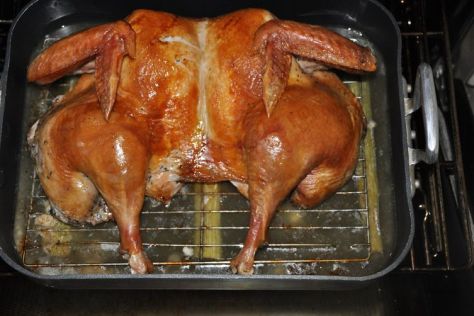
spatchcock

Now that all the rough planning is done, let’s get into it. Get your roasting pan out, and leave the roasting ‘rack’ behind. Don’t worry about greasing the bottom of the pan, or pouring in broth or water for moisture. Trust me, the turkey will make it’s own juices. You can put the bird straight in the pan dry, or you can create a bed of sliced onions, carrots, parsnips, potatoes, and other root vegetables that will increase the flavor and create a nice side dish to serve with the turkey after cooking. You can put the turkey in whole, or you can get fancy and ‘spatchcock’ it so it presents nicely. Spatchcocking is basically butterflying the turkey by cutting out the spine and cracking the hip and chest bone so it lays flat. This allows for a beautiful presentation, reduces the cooking time slightly, and allows for nicely crisped skin, as the entire ‘outside’ of the bird is now face-up, with the chest cavity face down in the pan. Since turkey is a bird, their bones are fairly lightweight; they can be spatchcocked with a basic pair of kitchen shears and a little muscle, don’t attack it with a cleaver or chef’s knife or you could lose a finger.

If you or any relatives like to eat the skin (it makes for moister chicken anyway), you can get it nice and crunchy (much better J )by covering the entire pan with foil until it reaches an internal temperature of about 120 oF, at which point you should remove the foil (but save for later) to allow the skin to brown at the end. Alternately, if any parts of the bird are starting to look burned, like the wing tips or drum sticks, wrap them in foil to locally slow down the cooking process.

This bit here is the secret to a completely cooked, yet moist bird.  When the center of the breast reaches 158 oF to 160 oF, pull it out of the oven, put it somewhere safe on the counter so it doesn’t burn anything, then wrap the pan in foil and then cover the entire thing with multiple towels or blankets. Cooked food naturally retains it’s heat and continues to cook, even after you are done “cooking” it. This is why vegetables are often “blanched”. Insulating the turkey when it is at 160 oF out of the oven takes advantage of that natural process, resulting in a turkey that just hits 165 oF without going over into the dry cardboard mode.  Even better, with the turkey covered, it can sit on the counter for several hours without having to be re-heated for serving. I pulled a 20 lb turkey out of the oven at 9:30 pm, and left it covered on my counter, and thought it was warm enough to eat the next morning when I got up at 5:30.

If you must carve the turkey early to make space, just part out the turkey into the breasts, legs, thighs, etc. without slicing it to help keep in the moisture. Leave the skin ON, even if you won’t eat it; the goal is for moist turkey, and the skin helps.  I personally suggest saving the juice from the pan, and the carcass, which makes a great turkey broth/soup and gravy, but that’s a lesson for another day.


Well, that was a lot of reading, so I’ll summarize the process below, like all the fancy cooking blogs that share their recipes.

  • Thaw your turkey several days early, and allow it to come to room temperature several hours early. A frozen turkey the morning of is a lost cause. No basting, no stuffing (cook separately).
  • Preheat the oven to 325 oF.
  • Calibrate your thermometer.
  • Prepare your root vegetable bed in your roasting pan (optional).
  • Put turkey in roasting pan (spatchcocking optional), season skin (optional) and cover with foil.
  • Plan for 12-15 minutes per lb of turkey, do first temperature check at 1/3 – 1/2 of planned time.
  • Remove foil at ~120 oF for crispy skin (reserve foil for later).
  • Remove Turkey at 158-160 oF.  Immediately wrap tightly in foil and multiple towels/blankets, keeping safety in mind so you don’t burn the place down.
  • Turkey will remain hot enough to serve for several hours, carve as close to serving time as possible. If carving early, part out first, then slice before eating. Reheat/maintain heat in a chafing dish, with some water in bottom to maintain turkey moisture.

Pick a Fence, Any Fence

When most people pick a fence, they usually go for the picket fence, vinyl fence, or the chain link fence. These are standard fences, and work well enough for a suburban front yard, but fencing can be costly. If you live in a more rural area, or have a lot of property, you may want to consider more affordable options, like DIY fencing.

There are a few options that are less “DIY”, but are still easy to set up and can be relatively affordable. High tensile wire and welded wire fencing can be effective at stopping larger animals, but may be too open to keep smaller animals out of say a garden for instance.  Hardware cloth or chicken wire is fine enough to keep out smaller animals, but isn’t always very tall, so it won’t keep out animals like deer.

Then there are the super cheap/free, DIY fences, typically made from local or recycled materials. Straw bales have a wide variety of uses; depending on where you get them from they might not be that cheap, but they have the benefit of completely breaking down and providing an excellent layer of partially composted mulch the following year. Simply stack them to the height desired.  Another option is to make a fence from pallets, it can be as simple as stacking them side by side and screwing them together for a 3-4 foot tall picket-style fence, or as complicated as a full-on shed.

wattle
A typical wattle fence

Finally, there are fences that don’t always look like fences, usually either made from still living plants or recently dead ones.  A wattle fence is basically a bunch of branches woven around posts driven into the ground. A brush fence is simply a pile of dead branches interlocked together so there aren’t any gaps big enough to push through. The hands down best fences however are living fences. This can be done with dense, thorny bushes like roses or brambles (raspberry/blackberry), or even with trees.  Trees can be coppiced, where they are cut down to the ground to grow back as a dense bush, or pollarded, where they are cut several feet above the ground to serve as living fence posts that never need to be replaced. The primary problem with living fences is they can take years to get established. The Tinker homestead is currently working on a rosebush hedge, but until it’s is established and impenetrable, we have had to put up a temporary welded wire fence.

coppice pollard

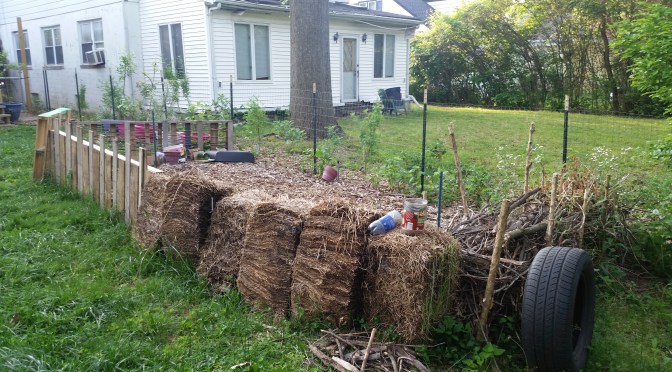
As can be seen in the feature image, I experimented with several varieties of fencing for the garden. I used a bunch of fallen branches from the tree in my yard to play with a brush fence, some straw bales from last winter, some free pallets, and a pallet/wattle hybrid so I can move it around instead of being stuck in one place.

What are you willing to try? If you are willing to put in the work, they can often pay dividends, especially if you use productive plants in a living fence, like fruit trees in pollarding, or raspberries/blackberries for a hedgerow.


The Beginner’s Livestock

Many people who wish to pursue a self sufficient lifestyle or start a homestead are often held back by fear, or excuses. When I have more land, When I have more money, etc. etc.  There are several solutions to get around the fears and government restrictions, even if you live in the middle of a major city on 1/10th of an acre.

cute bunny
Could you hurt this face?

The first option is rabbit. Rabbit is hands down the most efficient livestock in converting feed to meat. One buck and four does are almost enough to provide all of the meat requirements for a small family.  This is due the the origins of the expression, “breeding like rabbits”.  You can also feed them straight from your lawn, and their poop is an excellent fertilizer.  However, you have to be able to “harvest” your rabbits, which many people are unwilling to do.

The second option are chickens. They are easy to care for, and the most popular beginner’s livestock, but they are illegal in many cities, and if not cared for properly they can stink, be noisy, destroy things, and make you a bad neighbor if you aren’t careful.  If you are lucky enough to be able to keep chickens, and are willing to do so, they are a great start.

Since I live in an oppressive city on a fraction of an acre, chickens aren’t an option, and Mrs. Tinker wouldn’t stand for dead bunny rabbits. That leaves a third option, QUAIL!

Quail

Quail are a fraction of the size of a chicken, so you can easily keep a dozen quail in a 2×4 cage.  Quail eggs have several health benefits when compared to chicken eggs, although their larger yolk to white ratio means they have a slightly higher cholesterol count per serving.  Quail are more consistent layers, and eat a fraction of the feed for the same volume of eggs.  They also mature to egg laying age in about 4-6 weeks (1/3 to 1/4 of the time compared to a chicken), so it costs you less time and feed when raising your own quail for eggs.  When raised for meat, quail are also more efficient than chicken, although not as efficient as rabbit.  They are basically single serving birds (less packaging/ butchering involved), making processing and storage easier. Many people are able to completely clean a quail in just a minute.

There are several varieties, and quail is generally considered a game bird, which might get you into trouble. However, the coturnix quail has been bred in Japan for thousands of years and is considered a domesticated breed. Just like dogs came from wolves, the coturnix is a breed that has been bred for efficiency in egg and meat production, and won’t even go broody (want to hatch her own babies) while many chickens still do.  Due to their tiny size, and the fact that they can fly, they are very vulnerable and can’t be left to free range or they will become dinner for any number of small predators. They must be kept in a cage at all times, although they can be tractored to allow them the opportunity to walk on grass and hunt for bugs.  I learned quickly that this is generally a bad idea in a small back yard; they poop a lot and it attracts lots of flies if not managed properly.

In my next post, I’ll talk in more detail about raising quail and show you my setup, and what I’ve learned so far.

Root Cellar Complete

It’s finally done! The plants are out, the room is cleaned, the food is in!

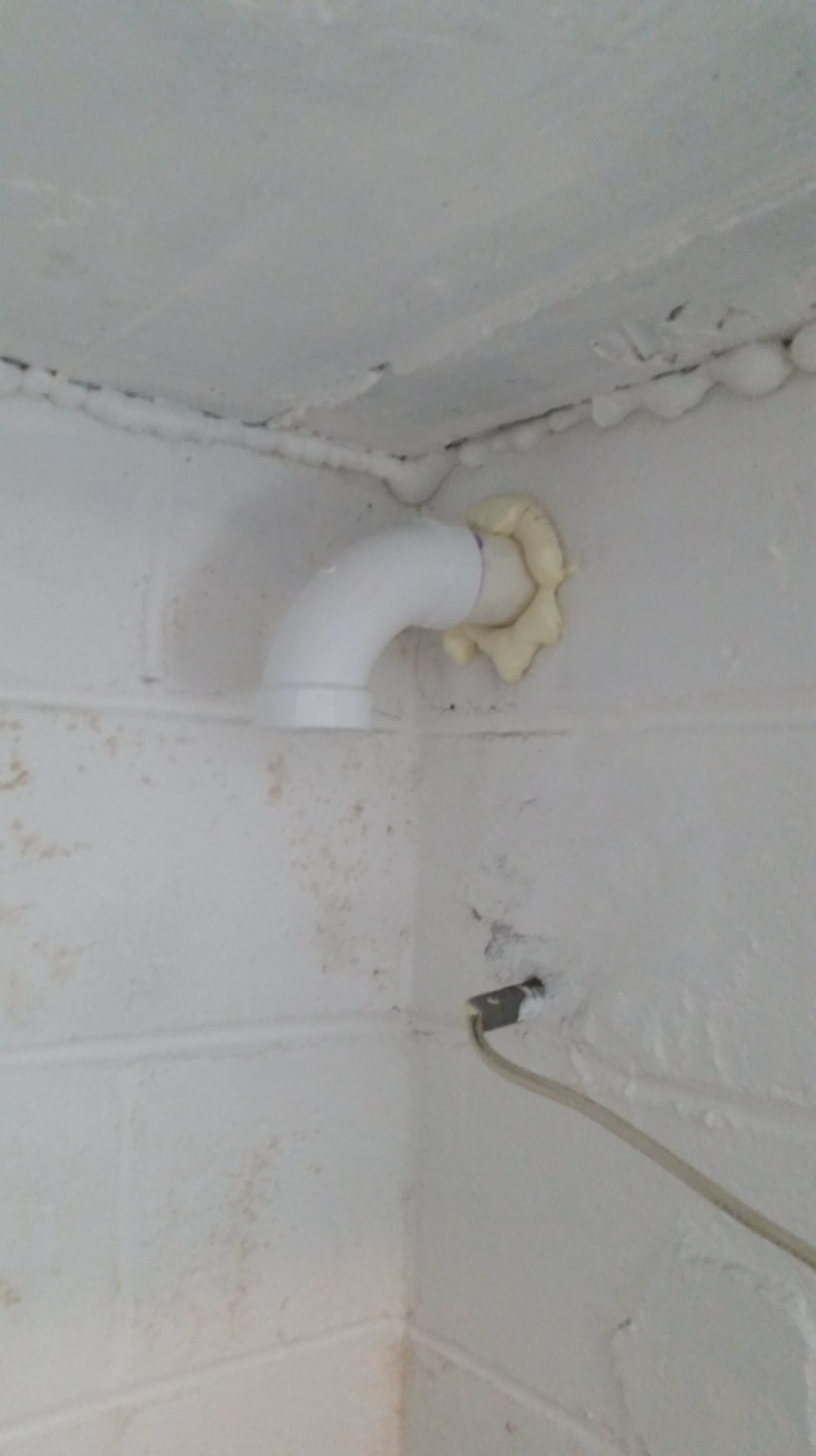
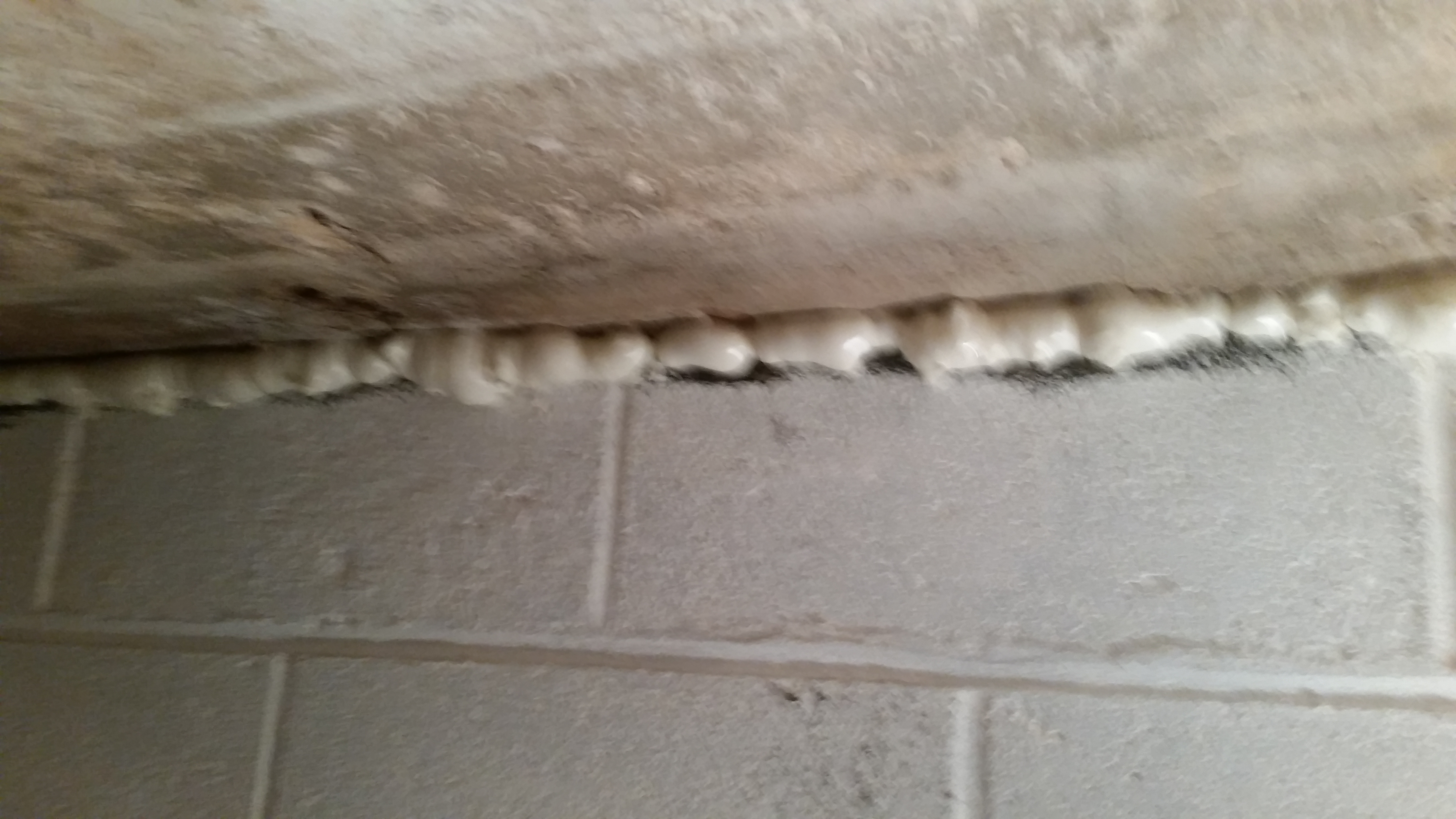
As I mentioned in the earlier posts about root cellars, they need to have good ventilation to prevent spoilage and growth of mold/mildew. I accomplished this by breaking two holes into the walls, one outside and one into a secluded portion of the basement.  I used pvc piping and a floor drain with window screen to keep any insects from getting inside, then sealed it with spray foam insulation.  I did the same thing minus the floor drain (only screen) for the vent into the basement. This will allow a cross breeze, which can also be manipulated for a limited amount of temperature control.2016-06-23 20.06.252016-05-30 15.37.19

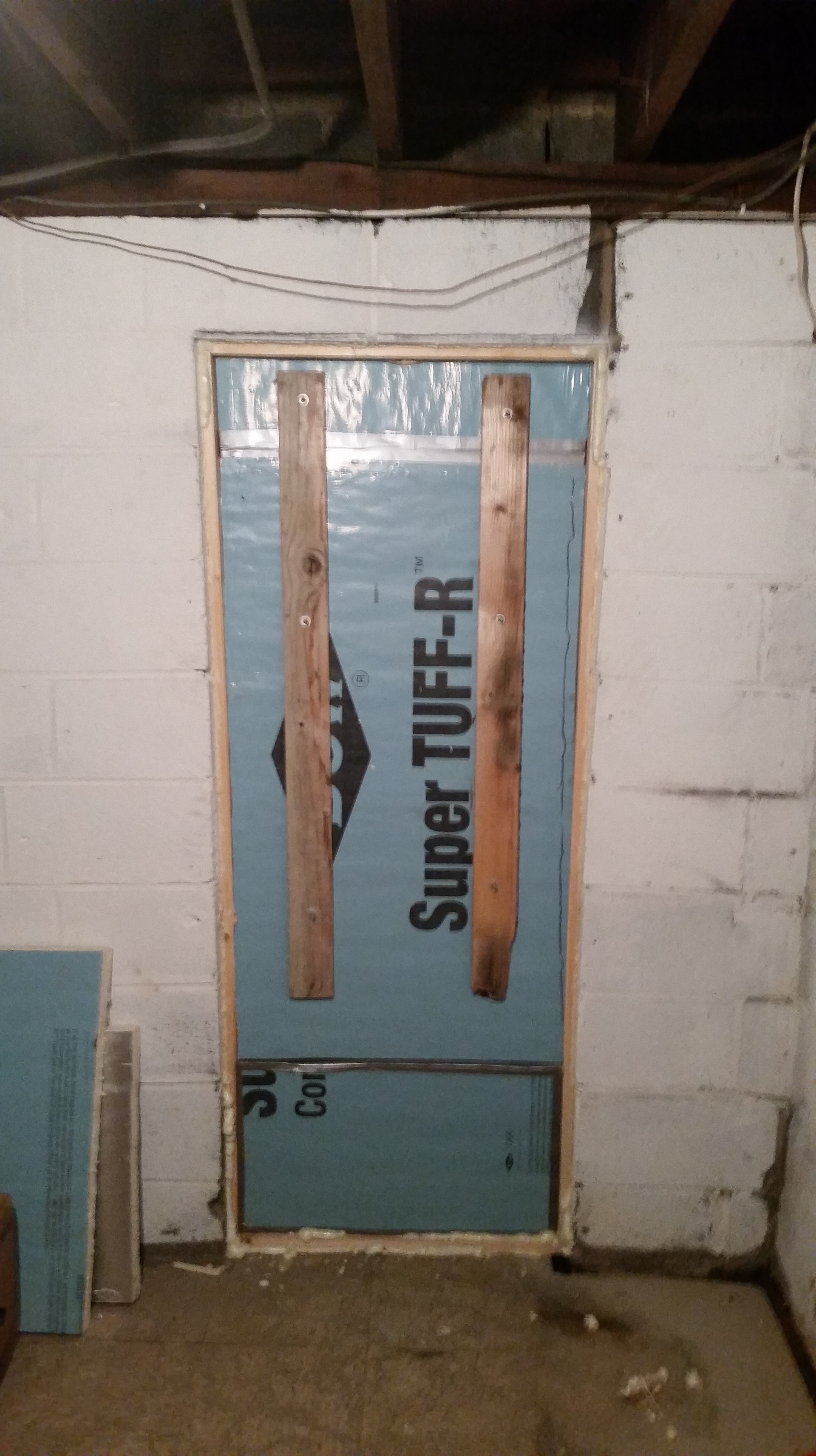
After installing the vents, I also had to make it bug proof, both for food security when i have fresh/raw produce, and so lady tinker will feel safe going down there.  I accomplished this by waterproofing the entire room and sealing all the cracks. I also had to install a bug-proof doorway, which I cheaply accomplished using some boards, more spray insulation, and scrap 2″ foam boards from an earlier project.  I also packed some foam into the french drain under the door frame to allow water out but keep any insects from getting in.

improvised doorframe braced until the insulation hardens

2016-06-23 20.45.23

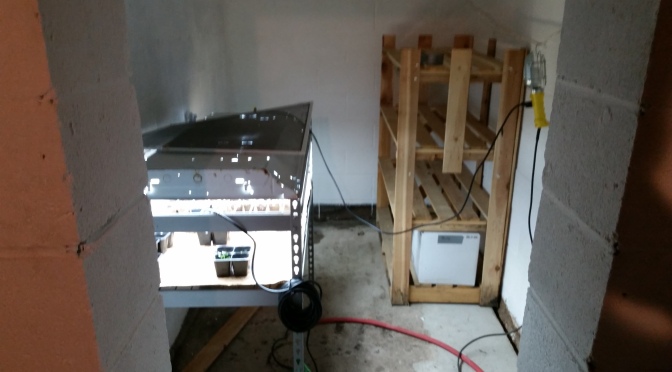
So it’s Done! Other than some experimentation with automation to play with fans and temperature controls, it’s now a fully functioning root cellar.  This will significantly increase our storage capacity and free up space in our pantry in the spare room upstairs (which was honestly a little crowded with shelving).

Root Cellar Update

So,  it’s been a few months since I started using the cellar as a grow room,  and one big lesson learned is the basement was too cool. I will definitely need heat mats to germinate seeds in the basement next year,  the only plants that really did well were the tomatoes.

I’ve started hardening off my tomatoes,  and I had a few late starts, like my pepper plants,  along with some calendula and lupine. Since the grow bed has started slowing down,  I’ve started converting to root cellar mode. I’ve discovered Home Depot is a treasure trove of free wood in the form of palettes. Especially in the spring,  when they get rid of pre-fabricated shelving that their plants are sold on (score!).

This was just a quick update post; my garden has had a late start with all the crazy weather,  but I’ll show what I’m doing this year soon.

Biltong (jerky)

It’s long overdue, but I’m going to tell you about Biltong, which is a thicker, South African version of beef jerky.  The primary differences between biltong and traditional jerky is that biltong is made from thicker slices of meat and cured slower, without heat.  It is one more tool in the arsenal of preparedness; it’s another way to prepare food for long term storage that doesn’t require electricity, and is a skill that can make a premium product that you might otherwise eat normally, saving you lots of money over your lifetime.

The basic ingredients are:

lean meat, sliced THICKLY (preferably beef if you are just starting, but any meat should work)

vinegar (preferably apple cider or balsamic)

salt COARSE (preferably sea salt, or kosher, not iodized table salt)

pepper

coriander

brown sugar (optional)

2016-05-02 19.41.57

Start by slicing your meat into strips, approximately 1 inch thick and marinading them in the vinegar for about an hour or more.  Then sprinkle them with salt to evenly coat all sides of the meat.  Sprinkle with pepper, coriander, and sugar (I did not do) for flavor.

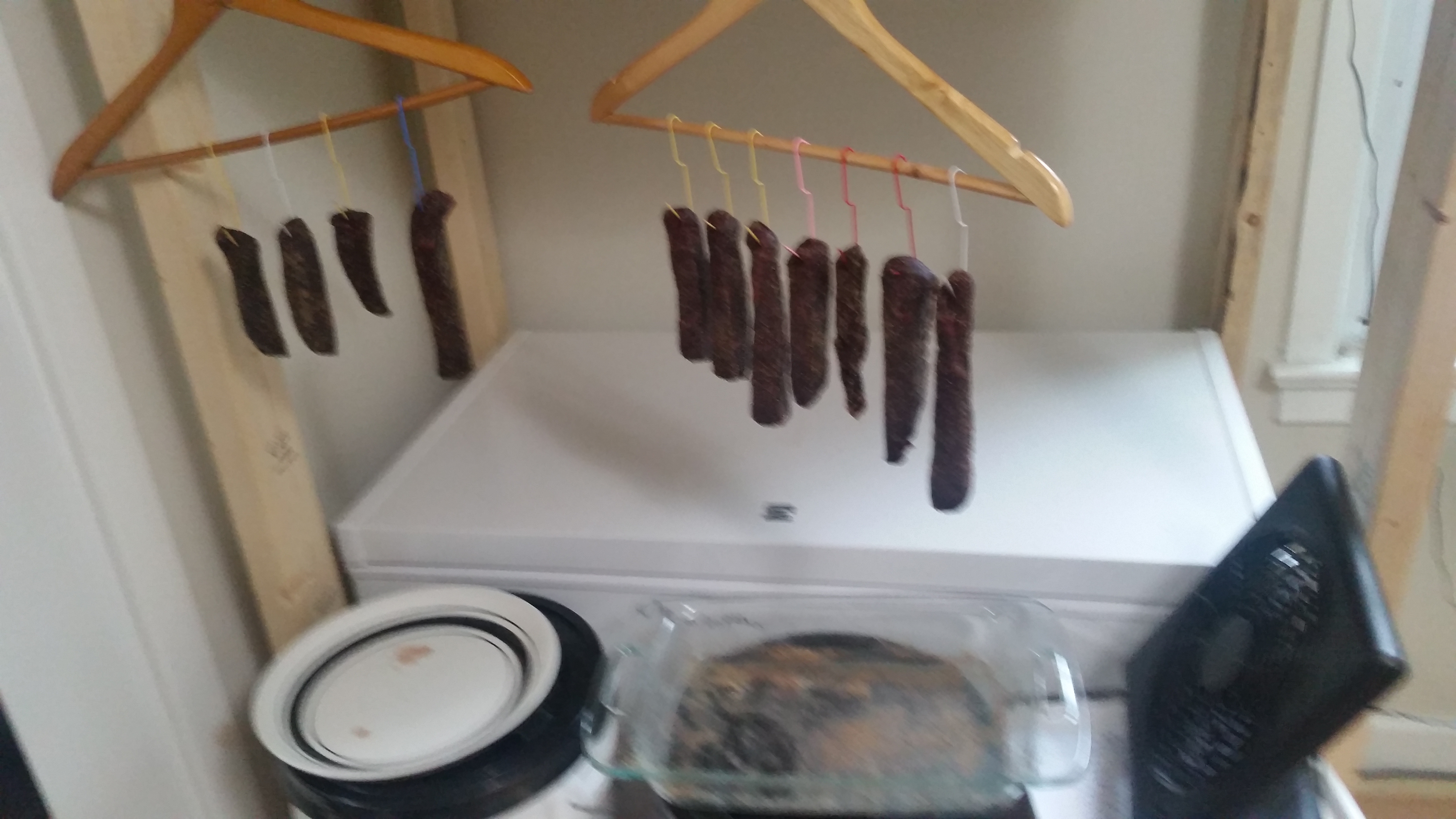
After the meat has been properly coated, you can either let sit in the fridge over night, or hang immediately. I waited overnight. Hang the meat on any sort of hook you can find, the easiest method is to unbend some paper clips.  Hang them somewhere cool and dry, out of direct sunlight.  If you are worried about pest or flying insects, you can either hang them in a cheesecloth/breathable bag, or have a fan blowing on them so flies can’t land on it. The fan has the added benefit of drying the meat out faster.  I hung mine on paper clips with clothes hangers over drip trays, with a fan blowing on them in a shaded corner of the pantry.

2016-05-03 05.54.19

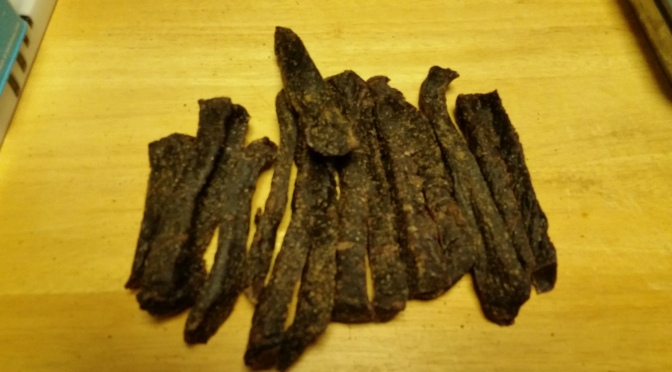
After about 4-5 days, I could noticeably see the difference. The outside was darker and hard, but the inside was still slightly raw and squishy. If you typically like your meat medium-medium rare, you will like it this way, the biltong is very tender and chewy with a great taste.  I cut off a few slivers to taste, but let the majority of it go until 7-8 days, at which point it was completely dried out.  It had the same pleasant taste, not salty like traditional jerky, but was much tougher at this point, and will last a long time in a jar in the pantry (not needing any refrigeration).2016-05-03 16.56.49

I should note that it is very important to select lean cuts of meat, or trim your meat well, as any fat will become chewy strands within the biltong, that might get stuck in your teeth.  I also found the completely cured biltong much easier to eat when cut into smaller pieces compared to chewing on a whole stick, the thicker slices were tough to chew at times.

Overall, I consider this a great success, and will continue to experiment and refine my recipe.

Root Cellar: Stage 2

Well, last time I talked to you about the benefits of a root cellar, and the beginning of my process to convert a corner room of my basement into a root cellar.  I started by cleaning it out and sealing some of the larger cracks in the wall.

I have since painted the walls with a waterproof paint to help keep it clean and prevent the walls from leaking. I did a little investigation and found where the leak was coming from outside and patched it up to help keep the water out. I also vacuumed and swept the floor so the room would be nice and clean.

2016-03-10 21.17.02

The next steps will be to install a tight door to help insulate the room and keep critters out, and to install a means of ventilation, which I will likely do by breaking a pair of small holes in the wall and installing vents.

I won’t actually need the root cellar until fall, so I will be using it in the meantime as a grow room to start my plants for the garden this spring.  The concrete walls will allow me to setup automated irrigation without worrying about water damage, but I will need to make sure the room doesn’t get too cool.


I’ll keep you updated!

Root Cellar: Stage 1

With this blog series, I am going to share my journey of building my own root cellar with everyone and hopefully inspire somebody to do the same.

We’ve talked about being self reliant and keeping a well stocked pantry for storing large amounts of food in the event of an emergency, whether it’s a financial/economic slump, a weather storm, or the end of the world. Food that isn’t shelf stable typically requires special storage considerations, but it isn’t always practical or affordable to have three freezers or refrigerators. Instead, the tried and true method of root cellaring can be utilized.

The basic necessities (which coincidentally are how your fridge and freezer also preserve food) are cold and dark. A root cellar usually can’t get as cold as either, but it makes up for it with the third important factor that a fridge and freezer lack, air flow.

They can be as large and complex as standalone buried bunkers, an insulated closet or corner basement room, or as simple and inexpensive as a buried cooler or broken fridge .

I happen to be lucky enough to have an isolated corner room in my basement where the oil tank used to be. This will naturally stay nice and cold through the winter and require minimal extra insulating.

The cellar's humble beginnings
The cellar’s humble beginnings

You might be able to see that the room already has a french drain to help divert moisture from the walls to the sump pump. This can be a blessing if properly managed because produce requires a certain level of humidity, but I’m going to seal the walls anyway.

My first step however, is to completely clean it out. That includes sweeping every square inch to get rid of the dust and spiders (a necessity if lady Tinker is going to eat anything stored down here). I also got a few cans of spray foam to seal the bigger cracks to help insulate the room and prevent the bugs from returning.

Seal all of the cracks

Next time I check in, I’ll be waterproof painting the walls and ceiling to help keep it clean and prevent bugs from sneaking back in.

DIY Toothpaste

The benefits of Fluoride, detergents, and abrasives in toothpaste can be debatable depending on where you look, although most people say it’s fine, or beneficial for you. I’m no expert, but I do like to know what I’m putting in my body when I can help it, so I made a point of finding a toothpaste recipe that worked well for me. It discusses many of the common ingredients in commercial and DIY toothpastes, and potential risks, benefits, or harms.

After the bit of research I’ve done, I’ve come to conclude that while baking soda may not necessarily be bad, I don’t want to take the chance of it wearing down my enamel since I already have sensitive teeth at times. I’ll stick with the finer bentonite clay and sea salt, which is ‘gentle’ enough to dissolve as you brush. Coconut oil has many beneficial properties as an anti bacterial and anti fungal, in addition to having lots of vitamin E.

Home Made Toothpaste recipe:

2tbsp coconut oil

2tbsp bentonite clay

1/4 tsp fine sea salt

1-2 tsp water

essential oil to taste


Start with the coconut oil, then add in the bentonite and salt ontop, and do your best to mash it with a spoon until it is a uniform consistency. Add a little water as necessary until it is at your preferred thickness. Note that coconut oil goes from solid to liquid in a warm room, so it may be much thinner if you don’t keep the AC on in the summer or like your bathroom as a sauna.  Once you get the consistency right, add essential oil to taste. For a batch of this size, 5-10 drops should be enough. Good default flavors will be any variety of mint, or cinnamon, but you can get creative with a sweet orange, basil, lavender, rosemary, etc.

As a bonus, you can add activated charcoal to your toothpaste. Activated charcoal is known for pulling colors out of things, so it is a natural teeth whitener (you can brush just with activated charcoal as a whitening treatment if you want).  The easiest way to get some is to go to your local pharmacy store and buy a bottle of activated charcoal in pill form, it is commonly used to settle stomachs as it is a good absorbent. Just add half of a pill to your toothpaste, or use half a pill on your toothbrush as a tooth whitening treatment. Just make sure you do a good job of rinsing it down the drain as it is very obvious if you let it sit in the bowl (it’s black).

The Case for a Well-Stocked Pantry

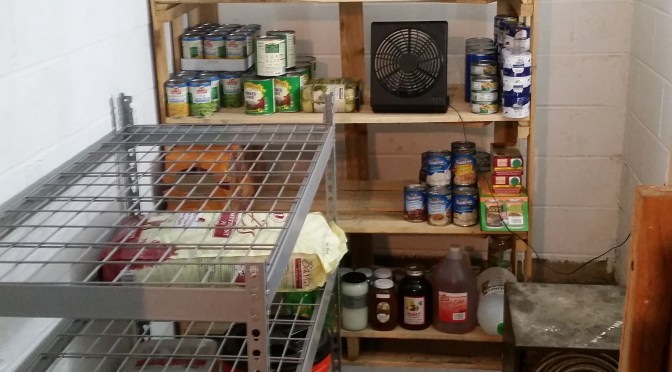
With the potential for a good snowfall this coming weekend along the northeast coast, I’m going to talk about some of the basics of food preparedness.  I’m not talking about spending $3000 on a pallet of MREs or ten years of freeze dried food. I’m talking about a comprehensive, balanced, well-stocked pantry. When done from end-of-the-world paranoia, people will call you a hoarder, tin-hat conspiracy theorist, or any other number of names. But there are several very valid reasons to maintain a well stocked pantry, especially considering the average household only has three days worth of food in their house (I read somewhere but can’t find the proof). As a matter of fact, several decades ago it was considered a normal part of life for our grandparents.  Anyone without a pantry was considered to be either irresponsible, or too poor off to be able to afford it, warranting charity from their neighbors to help them out.

The three easiest reasons to win someone over are economic, convenience, and resilience. There are a few basic investing principles like dollar-cost-averaging and capital deferral that make a case for storing food. Shelf stable foods, if bought in bulk when on sale, will save you money in the future if you instead had to buy it at the higher price later because you didn’t already have it.    It’s very convenient and easy to have a high quality meal when you already have a large variety of prepared food in the house, instead of opening the fridge realizing there is nothing worth eating, and having to go out to eat (spending more money) because you don’t have the time to cook from scratch.  There is also a very strong case for resilience and reduced stress; imagine someone in your family gets laid off (much more likely than a nuclear apocalypse, right?). Yea i know, “but that’s what unemployment is for”. Well, unemployment is a lot less than your regular paycheck, and if you were already living paycheck, to paycheck,worrying about making sure there is food on the table can be very stressful.   It can lead to poor health, or making hasty decisions, like accepting the first job you can find, instead of the right job or a good paying job.

The easiest and most affordable way to begin stocking a pantry is to start a food journal. Get a piece of paper and pen and leave it in the kitchen. Everytime someone eats something, in the house or out and about, add it to the journal for that day. After a few weeks, put stars next to the things that was eaten freuently, and a double star if that thing can be easily stored (like canned tuna, a box of mac and cheese, ice cream, etc.).  These are the things you eat REGULARLY and know that if you had a larger quantity of it, you would eat it all before it went bad.  The next step is a simple process called copy-canning. If you can’t afford to go spend 500 dollars on food to stock up on these new-found staples for your household, instead focus on one or two items at a time. Each time you eat one can/box/etc of that item, add two cans/boxes/etc of that item to your shopping list. Repeat the process until you slowly develop a stockpile that will last you three months, then move onto another set of food items. Note, that this does not mean three months of eating nothing but mac and cheese, but rather three months worth of  eating that thing at the rate you normally eat it. So if you ate mac and cheese once a week, you should copy-can your mac and cheese until you have twelve boxes(12 weeks/3 months).

The other easy opportunities to build your pantry is for bulk or opportunity buys. It is important to remember your food journal. DO NOT buy 50 cans of mushrooms because they are on super-sale if you hate mushrooms, this is akin to buying $3000 dollars worth of MREs just so you have food in an emergency, you want to eat something you like in a stressful emergency, not a can of slippery and slimy mushrooms.  That being said, wholesale clubs like Costco, BJs, Sams Club, etc. are great resources for buying items in bulk that last a long time like rice and beans, or bulk packages that can go in the freezer.  5 gallon buckets with gamma lids are great resources for shelf-stable bulk items like flour, sugar, and rice.  The opportunity buy are those super deals like the can-can sale at Shop Rite. I might get funny looks at the checkout, or an exasperated sigh from Lady Tinker, but buying $300 worth of soup and canned vegetables at half price just saved us $300 later this year. This food is shelf stable for one to two years, so as long as I don’t buy more than we will eat in a year, it is money well spent and money saved.

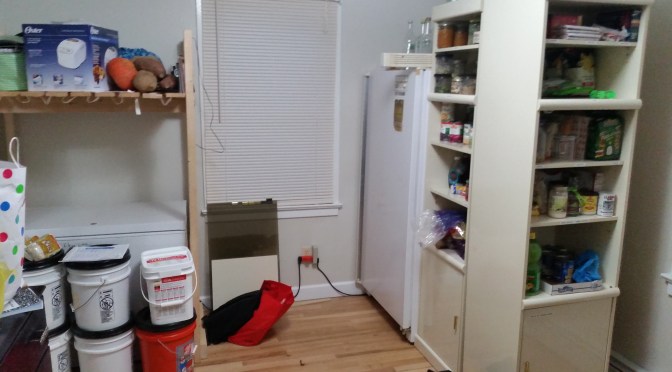
Your pantry doesn’t need to be an entire dedicated room like mine is, most people don’t have that much extra space. You can start with a spare closet, a few tupperware bins under the bed, ontop of the kitchen cabinets, or anywhere with some free space.  Any little bit helps.  The only other important point I will address here is to keep an organized and inventoried pantry. This includes your freezer, if you have an extra one (especially the chest freezers). You need to know what you have and where it is, or you will forget you have it it until you smell it starting to go bad.

Have I convinced you? Will you consider starting a pantry? Let me know.