Winter is around the corner, and its time to prepare for the cold weather! There are lots of ways to stay warm and reduce your heating costs at the same time using several basic principles applied in ways that have been forgotten by most people. Before the age of modern technology and electricity, people had to stay warm for thousands of years, and they took advantage of the largest source of free power and energy in the universe, the Sun. Understanding basic principles of heat transfer (convection, radiation, and conduction) can help us to more efficiently stay warm and comfortable indoors while a blizzard is raging outside.
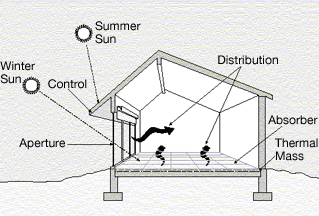
Utilizing the sun is one of the oldest, and more reliable methods of regulating temperature. If harnessed properly, it can both keep you warm in the winter and cool in the summer. There are different ways to take advantage of the sun, one of which would be passive solar heating/cooling. It is a design principle that keeps the house cool in the summer and hot in the winter based on the azimuth and altitude (position) of the sun throughout the year, and other design principles which you can learn about here if you wanted to get some more technical details. This is generally only applicable to people building a new house, or who have a large budget for a substantial remodel, as most modern houses are not designed or built with these concepts in mind. There are other easier and cheaper ways to get more immediate returns.
The first step is to SEAL THE CRACKS. You can heat your house all you want, but if your roof, walls and floors are like swiss cheese, the warm air will slip right out. You may as well pay to heat up your back yard. To find the cracks you should perform a home energy audit, or you can pay to have a professional do it for you. That link is the best one i have found so far, it covers how to find leaks and also how to fix them. The one thing I will say is they don’t seem to mention that you should also pull off the moulding to confirm that between the window/door and the frames are insulated. You should pack it with insulation (fiberglass or spray foam are most common). Even if there are no leaks, heat can radiate out through a gap in the wall much easier than a well insulated wall. Only after you check that all your windows and doors are properly insulated should you seal all the cracks so you don’t have to take it apart later to insulate these pockets in the wall.
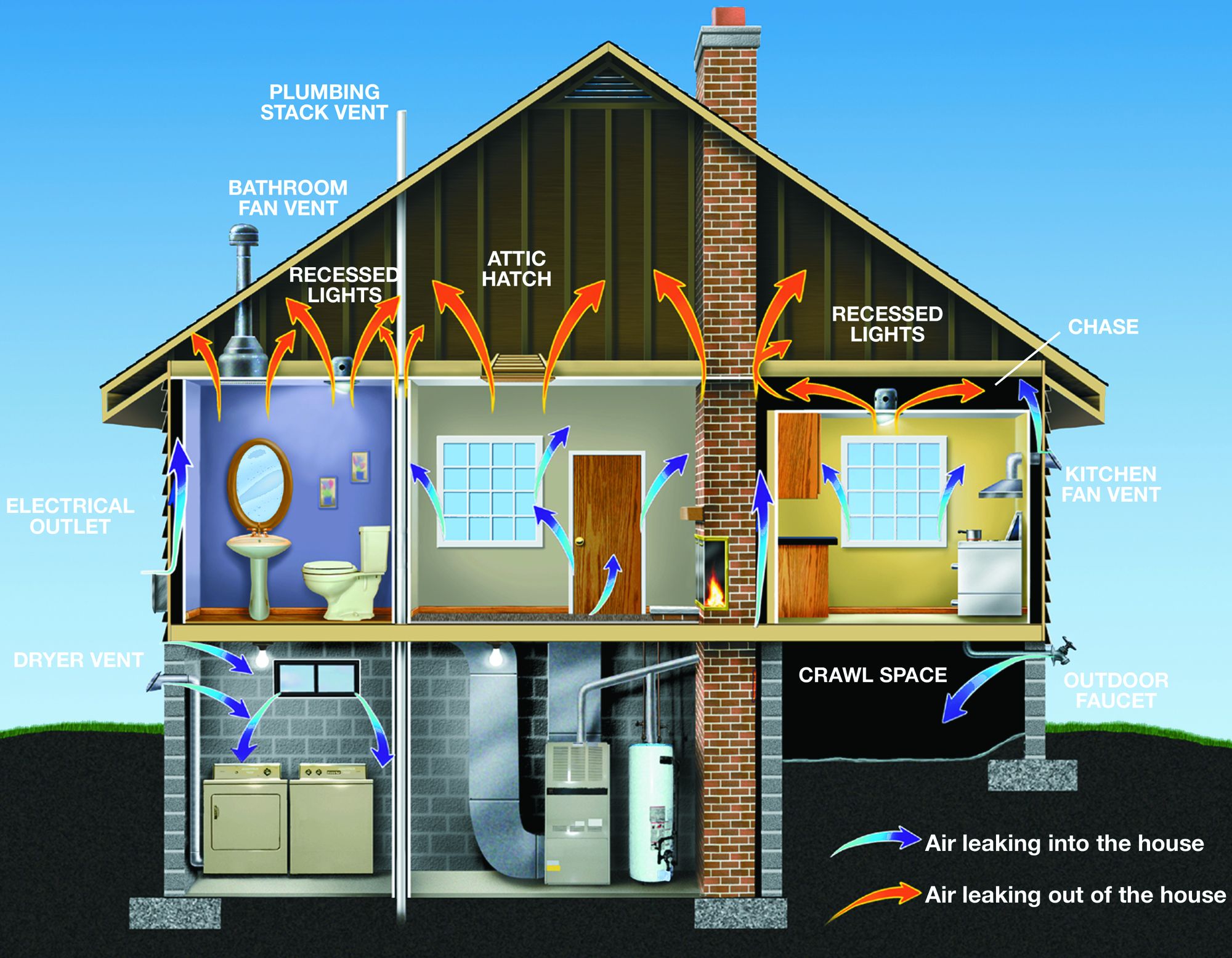
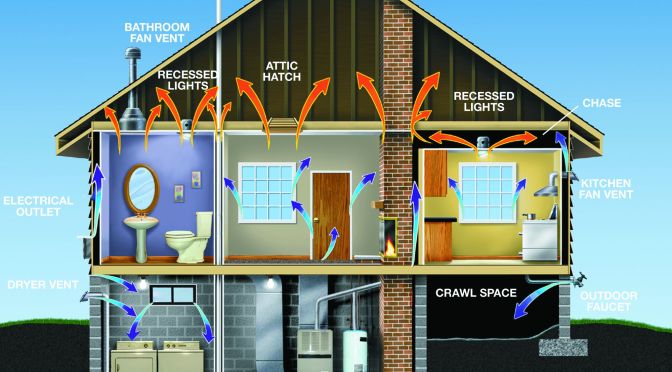
After sealing the more obvious items like windows and doors, you need to get a little more creative. You can get insulating gaskets for wall outlets and vents that aren’t used, check up around recessed lights on your top floor for proper insulation, make sure you have thick, insulated attic doors without any air leaks(see above), try to get creative to think of all the little spaces. Go up into your attic and make sure every inch of your ceiling is covered with insulation, no gaps around ductwork, vents, chimneys, etc. A little work and some cheap insulation can make a big difference in your electric bill, both in the summer and the winter, for decades to come. The same goes for your basement/crawl space, insulate your floor between the floor joists very well and get some caulk to seal any cracks in the foundation or between the foundation and the floor.
It is worth mentioning that the more insulation you have, the better, so you can always add more even if your house is already properly sealed. Insulation is rated by an R value, the higher the number, the better it is insulated. Homes typically have R values between 19-30, but you should strive for 30-60. The higher numbers really require thicker walls though, so you may be limited by space in pre-existing walls.
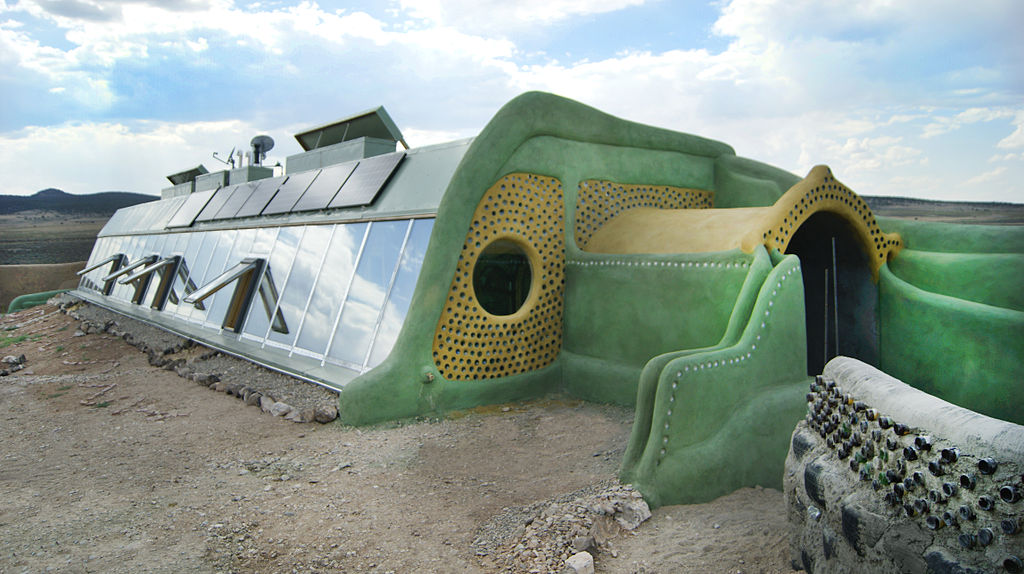
After you get your house as tight as a drum, then you can go back to making the sun work for you. You can be as hippie green as you want to get with it. More modern, subtle improvements would be to get heavy, blackout curtains, or “energy efficient” curtains. They block out all light and keep in the heat at night when closed. You leave your curtains open during the day to gain as much natural light and heat from the sun, and close them at night after the sun goes down to keep the heat inside. You can further magnify the benefits of this by putting a clear plastic film over your windows (like this one), it will act as an extra barrier to letting heat out, and increasing radiation from the sun into your house. Put some rugs down if you don’t already have carpet, it will help your feet feel warmer and better insulate your floors. Winter is a good time to bake lots of cookies, the oven throws off a lot of heat, just sayin’.
Depending on how determined, or creative you are, you can also make solar heaters to put into windows, or angle reflective surfaces to bounce more sunlight into your house to gain more heat. A solar heater is something very simple to make and implement, if you live on the first floor, and don’t have a neighbor that will complain about how ugly it looks. With a little carpentry skills, for ~$100 or even less if you can recycle materials, you will have something that requires no electricity, no maintenance, has no moving parts, can’t break, and that can provide up to or in excess of 100F air flow as long as the sun is out. An even simpler solution is to just hang a black plastic bag, or a thick dark colored cloth a few inches away from the window inside, and it will absorb heat and radiate it into the room. There are plenty of other creative solutions if you care to look on google.

Once you have maximized the efficiency of your house, and absorbed as much heat out of the sun as possible, now we look at heating efficiently. If you go back to heat transfer, there is convection, radiation, and conduction. Convection is where you heat the air and blow the air throughout the house(central heat). This is the least efficient, as you need to expend energy to heat the air in the furnace, then expend energy to blow the air through the house, losing heat as it moves, then blow across the room, and eventually blow onto you, where you don’t even absorb all of the heat. In addition to being one of the least efficient methods of heat transfer, you waste energy heating parts of the house that you aren’t even in. THE FIRST TIP to saving money is only heat the room you are in; heat the room that you will spend the most time in, probably the livingroom or bedroom. The next most efficient method is radiant heat, where heat radiates from the source to you. Think sitting next to a fire, or standing in a parking lot on a hot summer day; it’s so hot you can see the heat coming off the asphalt, that’s radiation. A wood stove in a house is a good source of radiant heat.
The MOST EFFICIENT method of heating is conduction, or heating by direct contact. This would be like sitting on a heating pad, holding a cup of coffee or hot cocoa in your hands, etc. The one I am most interested in are rocket mass heaters, which can be as hippie or as modern as you want. It can heat a house more efficiently than a standard fireplace, and more consistently than a wood stove with as little as 1/10 the wood because it burns so hot, but the heat is absorbed by the mass, and very little heat winds up leaving the house. Since there is a mass that absorbs and slowly releases the heat, it isn’t as hot as a wood stove, and it can be molded into a bench to sit on (conductive and radiant heat). Even though these are relatively cheap and easy to build, since they are so massive they really only apply to homeowners. For everyone else think hot water bottles, plenty of layers of clothes, and blanket heaters. If you use a traditional heater, keep it to the one room you spend your evenings in. When you go to bed, it would be most efficient for you to use a heat blanket with one or two quilts on top (to keep all the heat on you instead of in the room) instead of heating the entire room.
There you have it, with a little bit of work and not a lot of expense, you can save a lot of money this winter staying warm. Even if the power goes out, a little generator or battery bank can keep you more than comfortable since you have reduced the energy needs of your house.
 The Verdant Tinkerer