When most people pick a fence, they usually go for the picket fence, vinyl fence, or the chain link fence. These are standard fences, and work well enough for a suburban front yard, but fencing can be costly. If you live in a more rural area, or have a lot of property, you may want to consider more affordable options, like DIY fencing.
There are a few options that are less “DIY”, but are still easy to set up and can be relatively affordable. High tensile wire and welded wire fencing can be effective at stopping larger animals, but may be too open to keep smaller animals out of say a garden for instance. Hardware cloth or chicken wire is fine enough to keep out smaller animals, but isn’t always very tall, so it won’t keep out animals like deer.
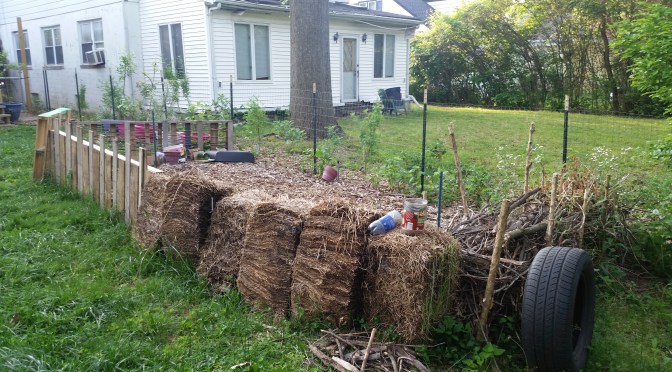
Then there are the super cheap/free, DIY fences, typically made from local or recycled materials. Straw bales have a wide variety of uses; depending on where you get them from they might not be that cheap, but they have the benefit of completely breaking down and providing an excellent layer of partially composted mulch the following year. Simply stack them to the height desired. Another option is to make a fence from pallets, it can be as simple as stacking them side by side and screwing them together for a 3-4 foot tall picket-style fence, or as complicated as a full-on shed.
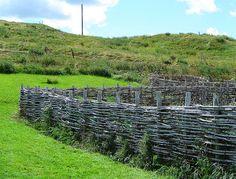
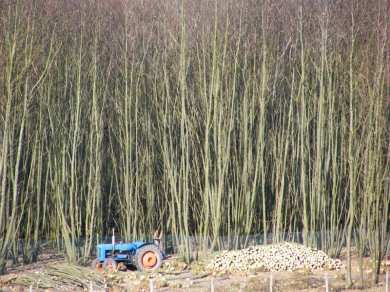
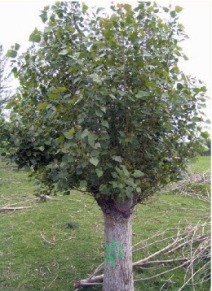
Finally, there are fences that don’t always look like fences, usually either made from still living plants or recently dead ones. A wattle fence is basically a bunch of branches woven around posts driven into the ground. A brush fence is simply a pile of dead branches interlocked together so there aren’t any gaps big enough to push through. The hands down best fences however are living fences. This can be done with dense, thorny bushes like roses or brambles (raspberry/blackberry), or even with trees. Trees can be coppiced, where they are cut down to the ground to grow back as a dense bush, or pollarded, where they are cut several feet above the ground to serve as living fence posts that never need to be replaced. The primary problem with living fences is they can take years to get established. The Tinker homestead is currently working on a rosebush hedge, but until it’s is established and impenetrable, we have had to put up a temporary welded wire fence.
As can be seen in the feature image, I experimented with several varieties of fencing for the garden. I used a bunch of fallen branches from the tree in my yard to play with a brush fence, some straw bales from last winter, some free pallets, and a pallet/wattle hybrid so I can move it around instead of being stuck in one place.
What are you willing to try? If you are willing to put in the work, they can often pay dividends, especially if you use productive plants in a living fence, like fruit trees in pollarding, or raspberries/blackberries for a hedgerow.
 The Verdant Tinkerer