Let me be honest up front when I say that I am an amateur home brewer. I consider myself strictly a home brewer, and not someone looking to open a business. I don’t really care about highly technical procedures, or using lots of chemicals, I care that it tastes good without spending a lot of money at the store. I should also clarify that I only brew wine (cider is my favorite), and not beer, because wines are so much easier than dealing with the wort and extra processing and stuff for beer. I don’t really like beer anyway, so that’s kinda convenient.
At the most basic level, making alcohol requires only sugar, yeast, and water. The yeast eats the sugar, giving off carbon dioxide and alcohol, you could say farting and peeing. This is fermentation. The fermentation continues until the yeast runs out of sugar (which would be a dry wine), or the yeast dies, which could either be done intentionally with chemicals, or the alcohol content is high enough to kill the yeast. Fruit juices are commonly used for flavor, but don’t contain enough sugar on their own to create any worth while amount of alcohol, so sugars are added to the mix.
This time I decided to make some cider, and wanted to do a little experiment to see the different results I would get between fermenting with white sugar, brown sugar, and honey.
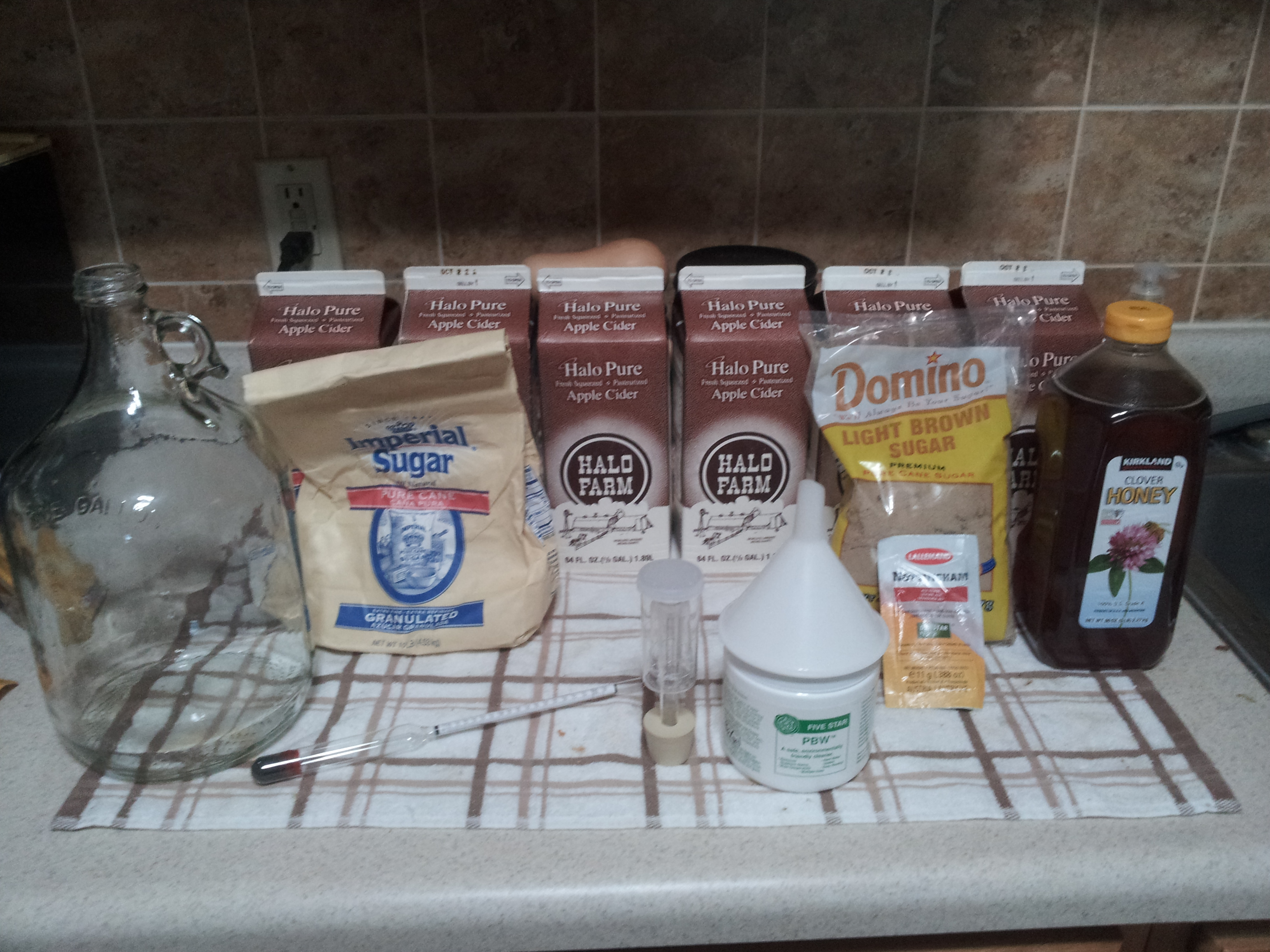
It is important your cider/juice doesn’t have any preservatives like ascorbic acid(vitamin C – no orange wine), which will kill your yeast, or at the very least prevent it from growing. Always prefer fresh juice from orchards if you can, or at least check the ingredients if you get it from a store, Whole Foods has a good option.
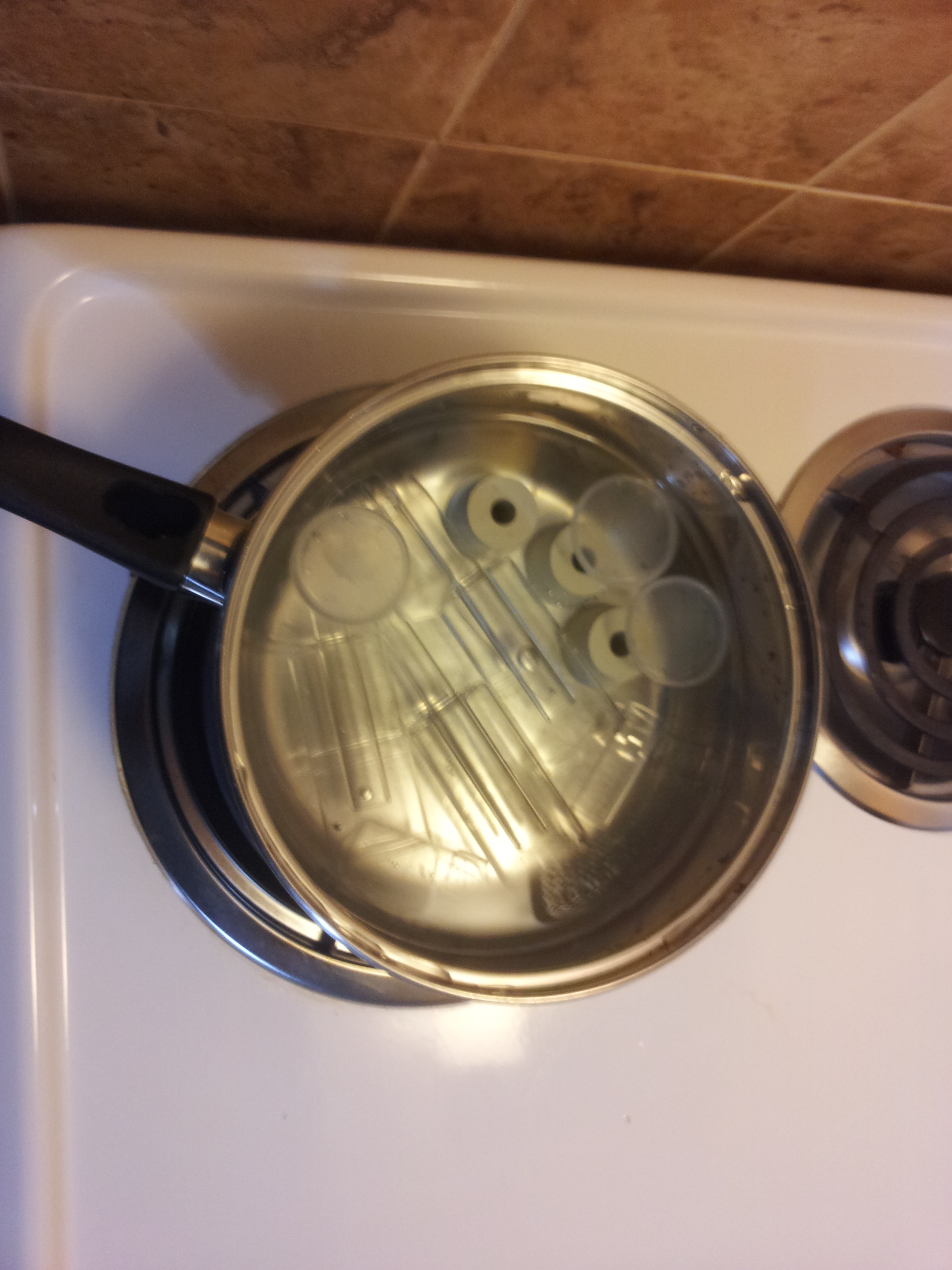
It is even more important to clean and sanitize everything you use when fermenting. You need to control the environment inside your fermenting container; you need to be certain your yeast is the only thing living inside, or you may likely wind up with VINEGAR instead of alcohol. I learned this one the hard way with some peach wine I had tried to make this summer. It can be hard to sanitize the inside of a large container, so I recommend a commercial cleaner like this one. You will also need vapor locks and rubber stoppers(depending on your bottle size) to keep bacteria and other contaminants from getting in, while letting the carbon dioxide out.
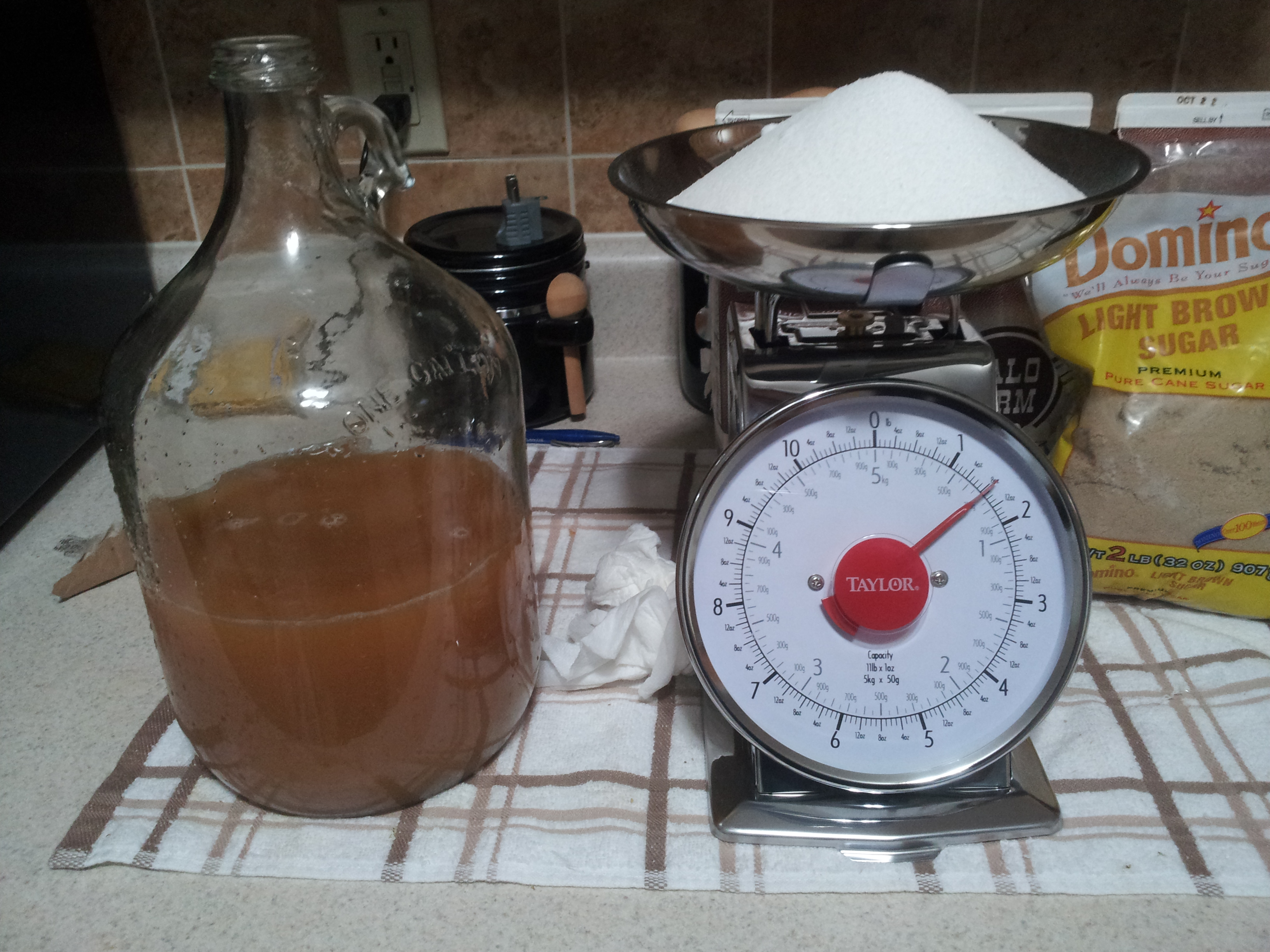
How I PERSONALLY brew (not the textbook preferred method), is to fill my container roughly half full with whatever base liquid I am working with, then add in your sugar and swirl/mix it around until it is mostly dissolved. This is a lot easier and simpler than heating your liquid and dissolving the sweetener into it, that takes a lot longer and requires more cleanup. For this round I am using 1.5 lbs of white sugar, 1.5 lbs of brown sugar, and 2 lbs of honey for each batch of cider. Honey has solids and minerals in it, so it does not have the same sugar content per weight than pure sugar. I came upon these numbers based on research I had performed online to try and get the same sugar content in each batch.
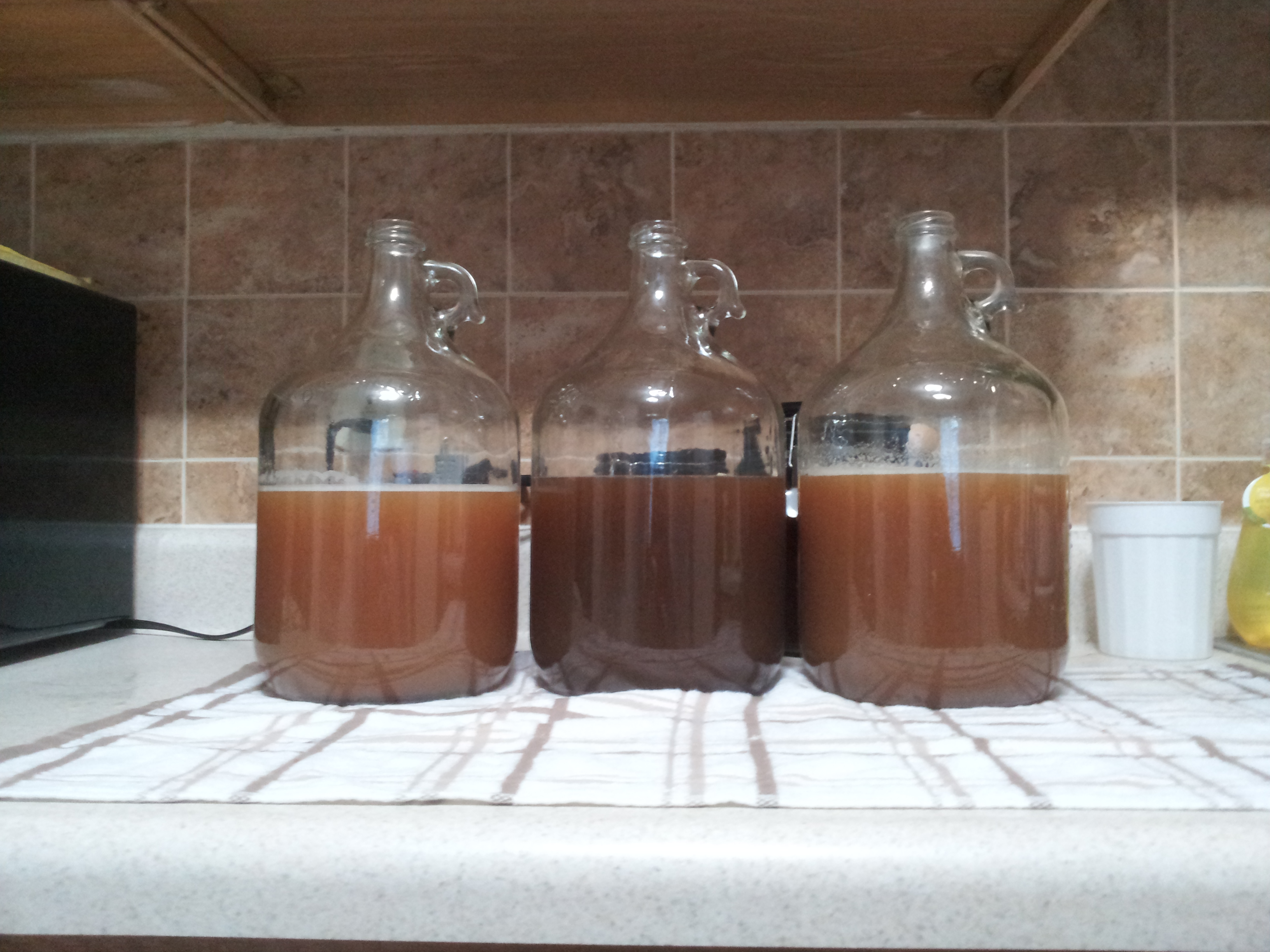
After the sugar was dissolved into each container, I had to add my yeast. Again, in an attempt to make sure everything was identical except for the type of sugar, I made my yeast starter as one batch and divided it equally amongst the three containers. Prepare your yeast starter based on the instructions for the starter you use. So far I prefer Lallemand Nottingham Ale yeast. Most instructions talk about measuring your yeast in grams, or otherwise typically a whole packet for a five gallon batch, which I have not done yet. Since my scale doesn’t weigh grams, I found this handy converter that allowed me to measure my yeast in tsp.
If you want to know what the alcohol content of your brew is after it is finished, you have one of two methods, either a refractometer, or a hydrometer. I use a hydrometer because it is much cheaper, but it’s a little less accurate, and if you don’t get specific gravity readings before AND after, it is nearly useless. That is exactly what happened this time, I forgot to measure the specific gravity before setting my containers to ferment, so I’ll never know the alcohol content besides relative strength by taste.
After you have your sugar and yeast in the container, top off the container with juice, making sure to leave some room for bubbles inside the container without mucking up your airlock. Then MAKE sure the lip of your container is clean, and attach your sanitized stopper and vapor lock, filling it with clean water to the fill level so pressurized carbon dioxide can get out, but nothing nasty can get in. Then you put it somewhere dark where you wont disturb it until the bubbles stop.
I’ll update with a review when it is ready to taste.
Comment if you have tried brewing before, let me know any of your successes or failures. Go get brewing!!
 The Verdant Tinkerer